Tag: frontend architecture

  • Design systems for chaotic teams: a pragmatic guide for 2026

    Design systems for chaotic teams: a pragmatic guide for 2026

    If your product team is shipping faster than you can name the files, you probably need to talk about design systems. Not the glossy keynote version, but the scrappy, slightly chaotic, very real version that has to survive designers, developers and that one PM who still sends specs in PowerPoint.

    What are design systems, really?

    Forget the mystical definition. Design systems are just a shared source of truth for how your product looks, feels and behaves. Colours, typography, spacing, components, interaction patterns, tone of voice – all in one place, consistently named, and agreed by everyone who touches the product.

    The magic is not the Figma file or the React component library. The magic is the contract between design and code. Designers get reusable patterns instead of 47 button variants. Developers get predictable tokens and components instead of pixel-perfect chaos. Product gets faster delivery without everything slowly drifting off-brand.

    Why chaotic teams need design systems the most

    The more moving parts you have – multiple squads, micro frontends, legacy code, contractors – the more your UI starts to look like a group project. A solid design system quietly fixes that by giving everyone a common language.

    Some very unsexy but powerful benefits:

    • Fewer arguments about colour, spacing and font sizes, more arguments about actual product decisions.
    • New joiners ship faster because they can browse patterns instead of reverse engineering the last sprint’s panic.
    • Accessibility is baked into components once, instead of remembered sporadically on a full moon.
    • Design debt stops compounding like a badly configured interest rate.

    Even infrastructure teams and outfits like ACS are increasingly leaning on design systems to keep internal tools usable without hiring an army of UI specialists.

    How to start a design system without a six-month project

    You do not need a dedicated squad and a fancy brand refresh to begin. You can bootstrap design systems in three brutally simple steps.

    1. Inventory what you already have

    Pick one core flow – sign in, checkout, dashboard, whatever pays the bills. Screenshot every screen. Highlight every button, input, dropdown, heading and label. Count how many visually different versions you have of the same thing. This is your business case in slide form.

    Then, in your design tool of choice, normalise them into a first pass of primitives: colours, type styles, spacing scale, border radius scale. No components yet, just tokens. Developers can mirror these as CSS variables, design tokens JSON, or in your component library.

    2. Componentise the boring stuff

    Resist the urge to start with the sexy card layouts. Start with the boring core: buttons, inputs, dropdowns, form labels, alerts, modals. These are the pieces that appear everywhere and generate the most inconsistency.

    For each component, define:

    • States: default, hover, active, focus, disabled, loading.
    • Usage: when to use primary vs secondary, destructive vs neutral.
    • Content rules: label length, icon usage, error messaging style.

    On the code side, wire these to your tokens. If you change the primary colour in one place, every button should update. If it does not, you have a component, not a system.

    3. Document as if future-you will forget everything

    Good documentation is the difference between design systems that live and ones that become a nostalgic Figma graveyard. Aim for concise, practical guidance, not a novel.

    For each pattern, answer three questions:

    • What problem does this solve?
    • When should I use something else instead?
    • What mistakes do people usually make with this?

    Keep documentation close to where people work: in the component library, in Storybook, in your repo, or linked directly from the design file. If someone has to dig through Confluence archaeology, they will not bother.

    Keeping your these solutions alive over time

    The depressing truth: the moment a design system ships, entropy starts nibbling at it. New edge cases appear, teams experiment, deadlines loom, and someone ships a hotfix with a new shade of blue. Survival needs process.

    Define ownership and contribution rules

    Give the system a clear owner, even if it is a part-time role. Then define how changes happen: proposals, review, implementation, release notes. Keep it lightweight but explicit. The goal is to make it easier to go through the system than to hack around it.


    Designer refining UI components that are part of design systems
    Developer integrating coded components from design systems into a web app

    Design systems FAQs

    How big does a team need to be before investing in design systems?

    You can benefit from design systems with as few as two designers and one developer, as soon as you notice duplicated components or inconsistent styling. The real trigger is not headcount but complexity: multiple products, platforms, or squads. Starting small with tokens and a handful of components is often more effective than waiting until everything is on fire.

    Do we need a separate team to maintain our design systems?

    Not at the beginning. Many teams start with a guild or working group made up of designers and developers who allocate a few hours a week to maintain the system. As adoption grows, it can make sense to dedicate a small core team, but only once you have clear evidence that the system is saving time and reducing bugs.

    How do we get developers to actually use our design systems?

    Involve developers from day one, mirror design tokens directly in code, and make the system the fastest way to ship. Provide ready-to-use components, clear documentation, and examples in the tech stack they already use. If using the system feels slower than hacking a custom button, adoption will stall, no matter how beautiful the designs are.


  • Why Developers Are Finally Taking Browser Performance Seriously

    Why Developers Are Finally Taking Browser Performance Seriously

    Somewhere between your beautifully crafted Figma mockup and the first rage-click from a user, something terrible happens: the browser. That is why browser performance optimisation has quietly become one of the hottest topics in modern front end development.

    What is browser performance optimisation, really?

    In simple terms, it is everything you do to make the browser do less work, more cleverly. Less layout thrashing, fewer pointless reflows, smarter JavaScript, and assets that do not weigh more than the average indie game. The goal is not just fast load times, but fast feeling interfaces – snappy, responsive, and predictable.

    For modern web apps, this goes way past compressing images and minifying scripts. We are talking render pipelines, main thread scheduling, GPU acceleration, and how your component architecture quietly sabotages all of that.

    Why browser performance optimisation suddenly matters

    Users have become extremely unforgiving. If your interface stutters, they assume your entire product is flaky. On top of that, Core Web Vitals now quantify just how painful your site feels: Largest Contentful Paint, Cumulative Layout Shift, Interaction to Next Paint – all those scary graphs that tell you your homepage is basically a PowerPoint slideshow.

    Designers are also pushing more motion, more microinteractions, more everything. That is great for user delight, until your animation stack is running on the main thread and your 60 fps ambition turns into a flipbook. Performance is now a design constraint, not just an engineering afterthought.

    Key principles of modern browser performance optimisation

    There are a few core ideas that keep showing up in every high performing app:

    • Do less on the main thread: Long JavaScript tasks block input and make your UI feel sticky. Break work into smaller chunks, use requestIdleCallback sensibly, and offload heavy logic to Web Workers when you can.
    • Reduce layout and paint work: Excessive DOM depth, layout thrashing, and wild CSS selectors all add up. Use transform and opacity for animations, avoid forcing synchronous layout reads, and be suspicious of anything that triggers reflow in a loop.
    • Ship less code in the first place: Code splitting, route based chunks, and ruthless dependency pruning are your friends. That UI library you installed for one button? Probably not helping.
    • Prioritise what is actually visible: Lazy load offscreen images, defer non critical scripts, and prefetch routes you know users will hit next. The first screen should feel instant, even if the rest of the app is still quietly loading.

    Design decisions that secretly destroy performance

    Performance problems are often baked in at the design stage. Infinite scroll with complex cards, glassmorphism everywhere, heavy blur filters, and full bleed video backgrounds all look lovely in static mocks. In a real browser, they turn into a GPU stress test.

    Good product teams now treat motion, depth, and visual effects as budgeted resources. Want shadows, blurs, and parallax? Fine, but you only get so many before the frame rate drops. Designing with a performance budget forces smarter choices, like using subtle transform based motion instead of expensive filter effects.

    Tools that actually help (and ones that just make graphs)

    If you are serious about browser performance optimisation, you will live inside the browser devtools performance tab more than you would like to admit. Flame charts, layout thrash detection, and CPU profiling are where the real answers live.

    Lighthouse and Core Web Vitals reports are great for quick health checks, but they are the blood tests, not the surgery. For deep issues, you will be looking at long tasks, JS heap snapshots, and paint timelines to spot where your shiny framework is quietly doing way too much work.

    Performance as a continuous habit, not a one off sprint

    The most successful teams treat performance as an ongoing discipline. They set budgets for bundle size, track key metrics in their monitoring tools, and fail builds when things creep over thresholds. They also keep an eye on infrastructure choices like web hosting, CDNs, and edge caching, because the fastest code in the world cannot outrun a painfully slow server.

    Design and dev team discussing UI and browser performance optimisation in a modern office
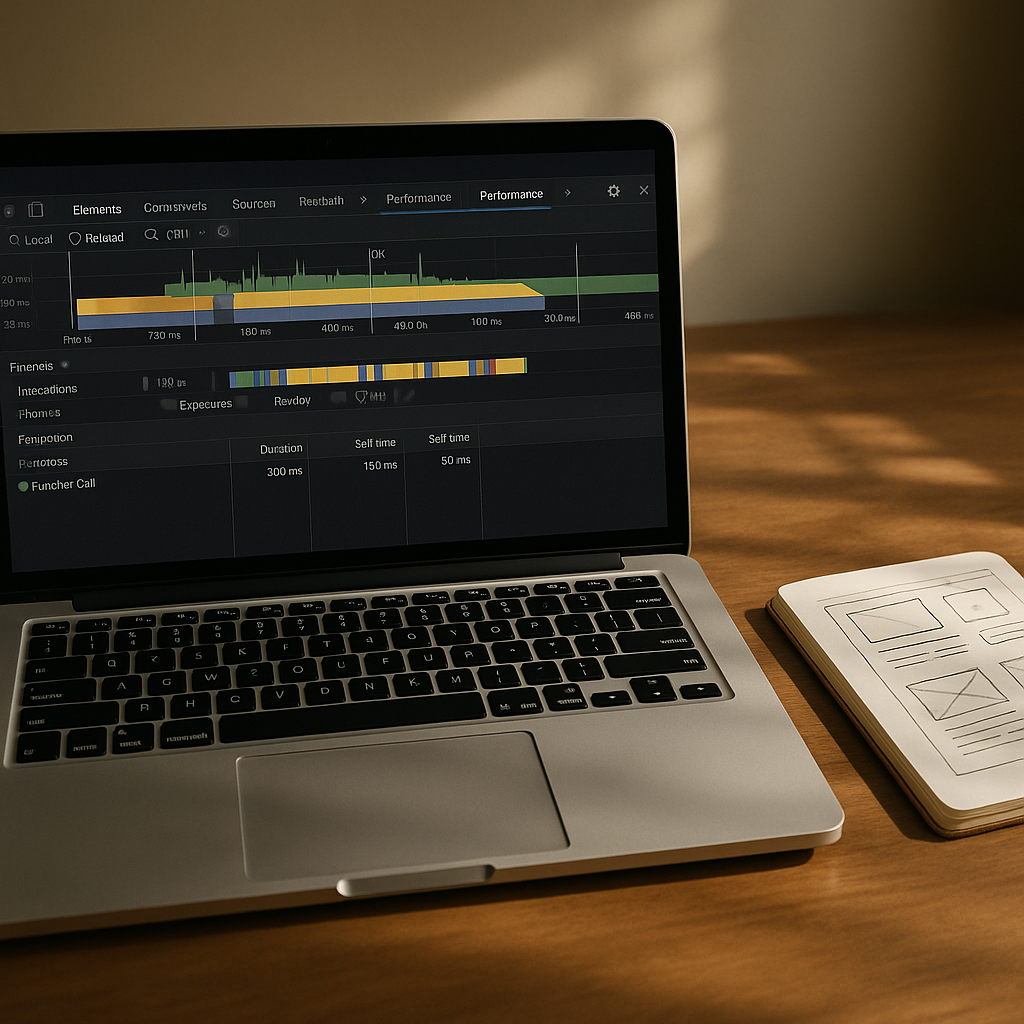
    Laptop showing devtools timeline used for browser performance optimisation beside UI sketches

    Browser performance optimisation FAQs

    What is the main goal of browser performance optimisation?

    The main goal of browser performance optimisation is to make web pages and apps feel fast and responsive from the user’s perspective. That means reducing main thread blocking, minimising layout and paint work, and prioritising visible content so interactions feel instant, even on average devices and networks.

    How can designers help improve browser performance?

    Designers can help by working with performance budgets, limiting heavy effects like blurs and shadows, and planning motion that can be implemented with transform and opacity instead of expensive layout changes. Collaborating early with developers ensures that visual ideas are achievable without tanking frame rates.

    Which tools are best for browser performance optimisation?

    For serious browser performance optimisation, the browser’s own devtools are essential, especially the performance, network, and memory panels. Lighthouse and Core Web Vitals reports provide a good overview, while flame charts, CPU profiling, and layout/paint timelines reveal the deeper issues affecting real user experience.