Let’s not bury the lede. AI graphic design in 2026 is not a distant threat on the horizon; it’s already inside the building, rearranging the furniture, and asking if anyone wants a flat white. Tools like Midjourney v7, Adobe Firefly 3, and a growing stack of generative platforms have made it genuinely possible for a non-designer to produce something that looks polished in under three minutes. That fact makes a lot of people in the design community uncomfortable, and honestly, it should prompt some serious thinking.
But uncomfortable and doomed are two very different things. The picture is more complicated than the LinkedIn doom-posters would have you believe, and significantly more interesting.
What AI tools are actually doing to the workflow right now
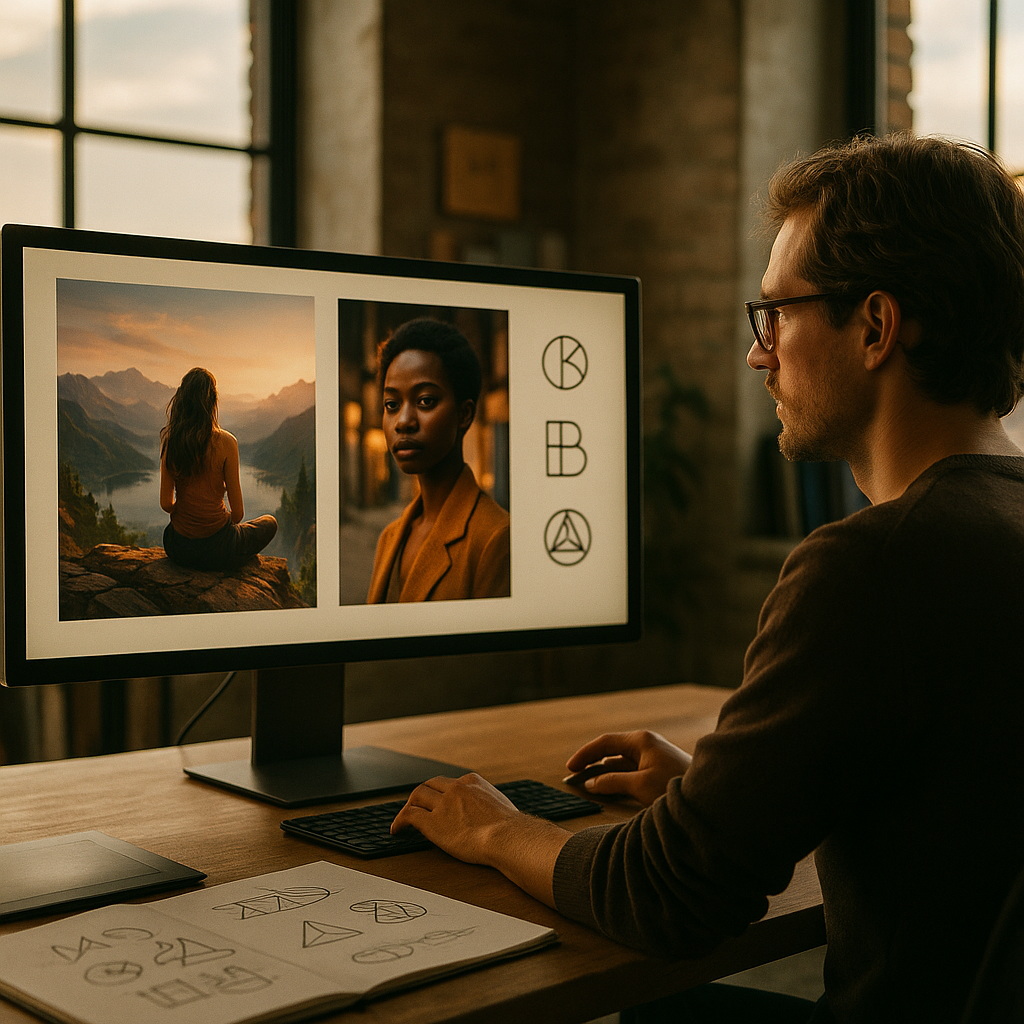
Adobe Firefly’s integration into Photoshop and Illustrator is the most mainstream example of generative design landing inside a professional workflow. Generative Fill, Generative Expand, and the text-to-vector features in Illustrator have compressed certain tasks from hours to minutes. Concept mockups, background generation, asset variation at scale, colour palette exploration: these used to be billable hours. Now they’re a keyboard shortcut.
Midjourney sits slightly differently. It’s brilliant at producing mood boards, visual references, and high-fidelity concept imagery that would previously require a full photoshoot or a commission. I’ve seen brand teams in London agencies use it to produce twenty concept directions in a single morning before a client presentation, something that would have been a week’s work eighteen months ago.
Then there’s Canva’s AI suite, which quietly ate a significant chunk of the low-end design market. Social media graphics, presentation decks, simple marketing collateral: a decent chunk of what junior designers used to cut their teeth on is now being handled by marketing assistants armed with Magic Design. According to a BBC report on AI’s impact on creative industries, around a third of creative professionals in the UK felt AI tools had already affected their workload by early 2024. That number has only grown.
Which design skills are genuinely at risk
Repetitive production work is the obvious casualty. Resizing assets across formats, generating multiple iterations of a banner ad, basic icon creation, stock illustration sourcing: these tasks are either automated or dramatically accelerated. If your entire value proposition as a designer lives in that zone, the market has shifted beneath your feet.
Template-driven design is similarly exposed. Not gone, but commoditised to a degree that makes it very hard to charge professional rates. This is partly why many UK design agencies have restructured their junior tiers; not because they’re employing fewer people necessarily, but because the nature of entry-level work has changed.
What actually still requires a human designer
Here’s where it gets genuinely nerdy and interesting. Generative AI is extraordinarily good at pattern completion. It produces outputs that are statistically coherent with what already exists. That is also its fundamental limitation.
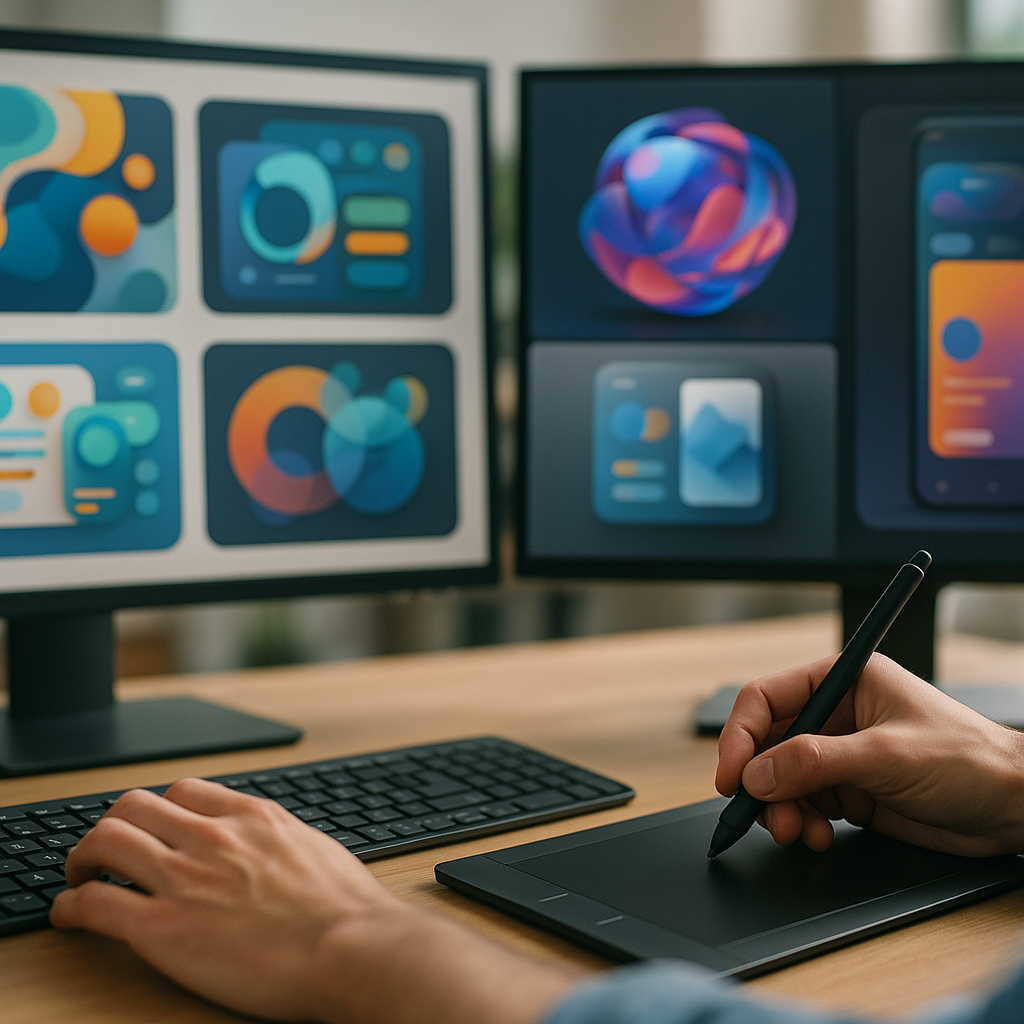
Brand strategy and visual identity work at the conceptual level requires understanding client psychology, market positioning, cultural context specific to the UK high street or a particular industry sector, and the ability to make opinionated creative decisions that are defensible in a boardroom. An AI can generate a hundred logo variations; it cannot tell you why one of them is the right one for this particular client at this particular moment. That reasoning is irreducibly human.
Typography expertise is another area where trained designers still have a serious edge. Choosing and pairing typefaces for specific contexts, understanding how type behaves in long-form reading environments versus display settings, knowing when to break the rules intelligently: Firefly cannot do this. It assembles, it doesn’t think.
Motion and interaction design remain largely in human territory. Tools are improving, but designing micro-interactions that feel genuinely intuitive, that respect the mental model of the user rather than just looking slick, still requires a practitioner who understands both design principles and behavioural psychology.
And then there’s the softer skill set that never gets listed on a job spec but runs everything: client management, presenting creative work compellingly, translating a vague brief into a sharp direction, knowing when to push back. No model has cracked that yet.
How designers can actually stay competitive in AI graphic design 2026
The designers I’ve seen thrive this year have done one specific thing: they’ve treated AI tools as a studio assistant rather than a rival. They’ve absorbed Firefly and Midjourney into their process the same way a previous generation absorbed desktop publishing. Photoshop once made darkroom technicians nervous. It also created an entirely new profession.
Practically, that means a few things. First, get fluent with prompt engineering. The ability to direct generative tools with precision, to know how to constrain an output stylistically, to iterate intelligently rather than randomly, is a genuine skill gap right now and it’s learnable. Second, push your strategic thinking upmarket. The more your value sits in the brief, the concept, and the rationale, the less exposed you are to automation of the production layer. Third, specialise. Generalist production designers face more pressure than specialists in, say, editorial illustration, brand identity for specific sectors, or packaging design for physical goods.
There’s also a real opportunity in being the person who can audit and quality-control AI-generated work. Because the outputs can be subtly wrong in ways that require a trained eye to catch: anatomical oddities, legally problematic resemblances to existing IP, brand inconsistencies, typographic errors baked into rasterised images. Someone has to check the work. Make that someone you.
The industry picture in the UK
UK creative industries contributed over £124 billion to the economy in the most recently reported year, according to the Department for Culture, Media and Sport. Design sits at the heart of that. The pressure isn’t that AI is destroying the field; it’s that it’s reshuffling the value chain. The designers who understand both the human craft and the machine’s capabilities will consolidate work that previously required larger teams.
The honest truth about AI graphic design in 2026 is this: it’s not coming for design as a discipline. It’s coming for design as a set of disconnected production tasks. If you’ve been thinking of yourself as someone who executes rather than someone who thinks, this is the year to change that.
The tools are genuinely impressive. They’re also genuinely limited. The gap between those two facts is where the interesting work lives.
Frequently Asked Questions
Will AI replace graphic designers in 2026?
AI is automating specific production tasks but is not replacing designers wholesale. Strategic, conceptual, and brand-level design work still requires human expertise, judgement, and client communication skills that current tools cannot replicate.
What AI tools are graphic designers using most in 2026?
Adobe Firefly (integrated into Photoshop and Illustrator), Midjourney v7, and Canva’s AI suite are the most widely adopted. Many professional studios also use Runway for motion work and various specialised generative platforms depending on their discipline.
How can graphic designers stay relevant as AI tools improve?
Focus on strategic and conceptual skills that AI cannot replicate, get fluent with prompt engineering so you can direct generative tools effectively, and specialise in a discipline where craft and human judgement command premium rates.
Is it worth learning Midjourney or Firefly as a professional designer?
Yes, absolutely. Designers who can direct these tools precisely and integrate them into a professional workflow are producing better work faster than those who avoid them. Fluency with AI tools is increasingly listed in UK agency job specifications.
What design skills are most at risk from AI automation?
Repetitive production work including asset resizing, stock illustration sourcing, banner ad variations, and template-based social media graphics are the most exposed. Skills tied to strategic thinking, brand identity, and complex client relationships are significantly more resilient.